Naudé’s early schooling seems to be a mystery. He supposedly started off in the small farm school and then stayed on the farm “La Cotte”, Franschhoek with his step-grandparents Anna Francina Hugo (July 1826 - 20 June 1902)11 and Abraham Paul Hugo (d.1904).12
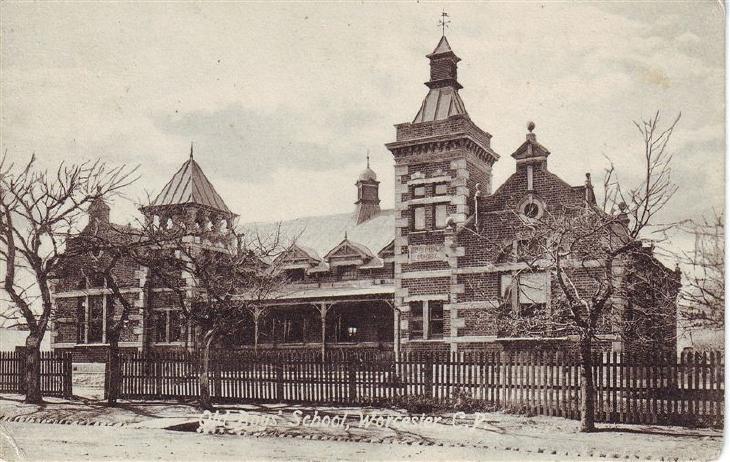
Some sources suggest schooling at Over Hex.13 He matriculated from Worcester Boys’ High:
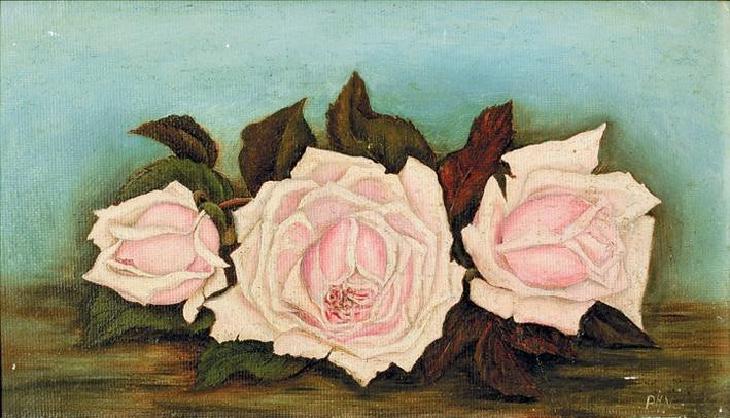
It sounds as if he was already painting and that Roses was painted during his early school years (still signed “P.H.N” lower right corner):
Roets suggests that his schooldays were difficult?14 After matriculating, he returned to the family farm.
In his talk about “Hugo Naudé - The man”, his nephew “Wollie” makes no mention of the artist’s early education, perhaps because “regrettably there are no members of the older generation left” to provide such details?15
He skips from birth to twenty two years later, when the artist embarks on his art education overseas after the celebrated writer, Olive Schreiner,16 who was a friend of his father and his stepmother, recognized his extraordinary talent. There is a document, dated 21 March 1975, confirming that he departed for England on the “Lismore Castle” on Sunday 11 April 1891, not in 1888 or 1889 as claimed repeatedly in the art literature. Here we also learn that he was accompanied by Olive Schreiner’s older sister Het, and not by Olive, as was previously assumed:
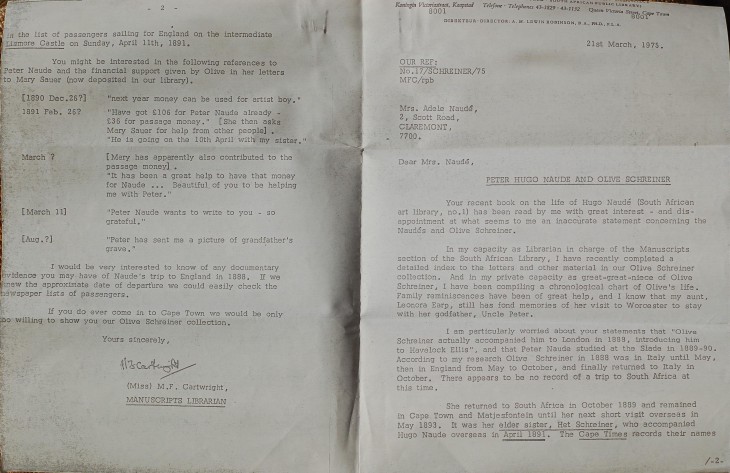
Transcription of above correspondence:
On SA Public Library letterhead, Queen Victoria Street, Cape Town 8001, Telephones 43-3829 – 43-1132, Director: A.M. Lewin Robinson, dated 21st March, 1975 – Ref No.17/Schreiner/75 MFC/rpb, addressed to Mrs Adele Naudé:
Dear Mrs. Naudé,
PETER HUGO NAUDE AND OLIVE SCHREINERYour recent book on the life of Hugo Naudé (South African art library, no.1) has been read by me with great interest – and disappointment at what seems to me an inaccurate statement concerning the Naudés and Olive Schreiner.
In my capacity as Librarian in charge of the Manuscripts section of the South African Library, I have recently completed a detailed index to the letters and other material in our Olive Schreiner collection. And in my private capacity as great-great-niece of Olive Schreiner, I have been compiling a chronological chart of Olive’s life. Family reminiscences have been of great help, and I know that my aunt, Leonora Earp, still has fond memories of her visit to Worcester to stay with her godfather, Uncle Peter.
I am particularly worried about your statements that “Olive Schreiner actually accompanied him to London in 1888, introducing him to Havelock Ellis”, and that Peter Naude studied at the Slade in 1889-90. According to my research Olive Schreiner in 1888 was in Italy until May, then in England from May to October, and finally returned to Italy in October. There appears to be no record of a trip to South Africa at this time.
She returned to South Africa in October 1889 and remained in Cape Town and Matjesfontein until her next short visit overseas in May 1893. It was her elder sister, Het Schreiner, who accompanied Hugo Naude overseas in
April 1891 . The Cape Times records their names in the list of passengers sailing for England on the intermediate Lismore Castle on Sunday, April 11th, 1891.You might be interested in the following references to Peter Naude and the financial support given by Olive in her letters to Mary Sauer (now deposited in our library).
[1890 Dec.26?] “next year money can be used for artist boy.” 1891 Feb. 26? “Have got £106 for Peter Naude already - £36 for passage money.” [She then asks Mary Sauer for help from other people].
“He is going on the 10th April with my sister.”March ? [Mary has apparently also contributed to the passage money].
“It has been a great help to have that money for Naude ... Beautiful, of you to be helping me with Peter.”[March 11] “Peter Naude wants to write to you – so grateful.” [Aug. ?] “Peter has sent me a picture of grandfather’s grave.” I would be very interested to know of any documentary evidence you may have of Naude’s trip to England in 1888. If we knew the approximate date of departure we could easily check the newspaper lists of passengers.
If you do ever come to Cape Town we would be only too willing to show you our Olive Schreiner collection.
Yours sincerely,
SIGNED
(Miss) M.F. Cartwright,
MANUSCRIPTS LIBRARIAN
Schreiner helped to persuade the family to send this talented man overseas to study art and introduced him to the writer, art collector and physician, Dr Henry Havelock Ellis,17 who suggested that he attend the prestigious Slade School of Fine Art in London. As is apparent in the letter above, Schreiner was also instrumental in collecting money as a loan for the trip and for his stay in London.
In his talk “Wollie” describes what a brave move this was for all concerned:
In those days this must have been a major step for a farmer’s son from the country districts of our country to take up art as a full-time career. In fact he is considered the first South African-born individual to study overseas for a full-time career as artist…. The artist’s father David Naudé must be given due credit – he must have been a remarkable man for he had to make this final courageous decision.
One can imagine Oupa Dawid’s friends saying “maar Dawid hoe kan jy jou seun ‘n kunstenaar laat word – om prentjies te skilder is mos nie werk nie” [translated: “but David how can you allow your son to become an artist – to paint pictures is surely not a job”].18
In his talk at the South African National Gallery’s centenary Retrospective Exhibition on 25 February 1970, “Wollie” says the artist’s father was apparently intellectually inclined with many interests beyond his farming activities and his farm was the meeting place of a wide circle of friends which included Olive Schreiner.
In fiery prayers David Naudé asked that future generations not be too rich and well-to-do because then they sell their soul to the world of material wealth and pleasure:19
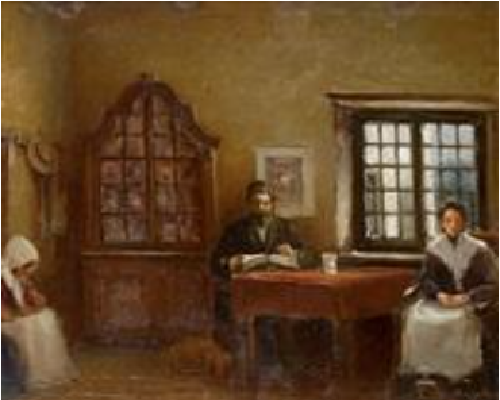
Further proof that Naudé was only in London in 1891, and not 1888, were ‘postcards’ sent to his family, such as this one, dated 2 October 1891, to his brother Wouter:20
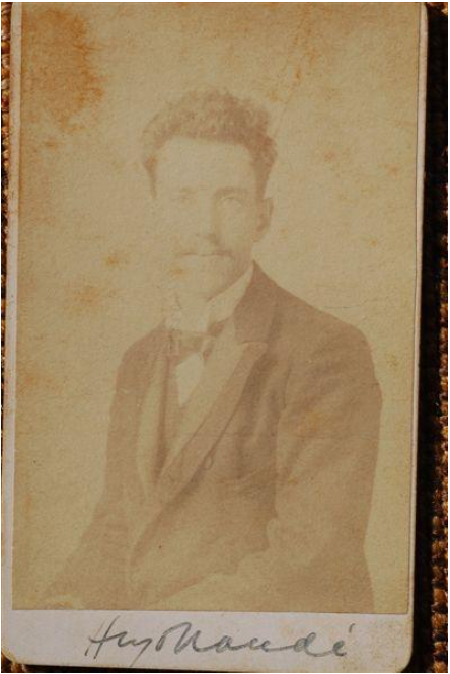
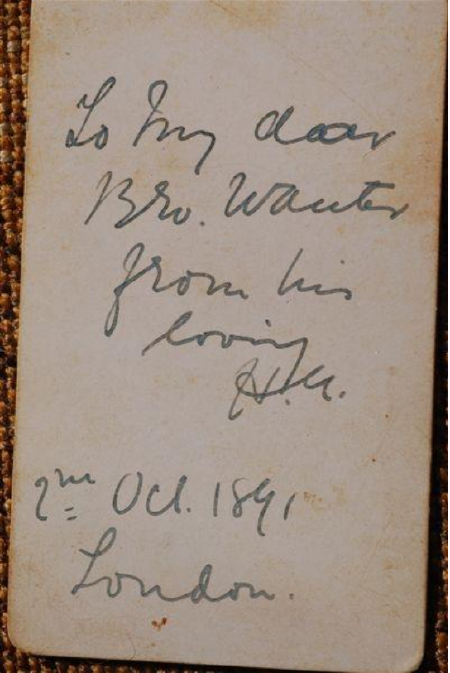
After a year at the Slade, where he was taught by the French etcher Alphonse LeGros (1837-1911), who apparently appreciated Naudé’s work,21 he spent four years in Munich studying mostly portraiture with Franz von Lenbach at the Kunst Akademie Münich. Portraits painted here were Peasant Woman Munich and a red chalk drawing of German Peasant Woman. The latter “fairly took the art professor by storm”.22
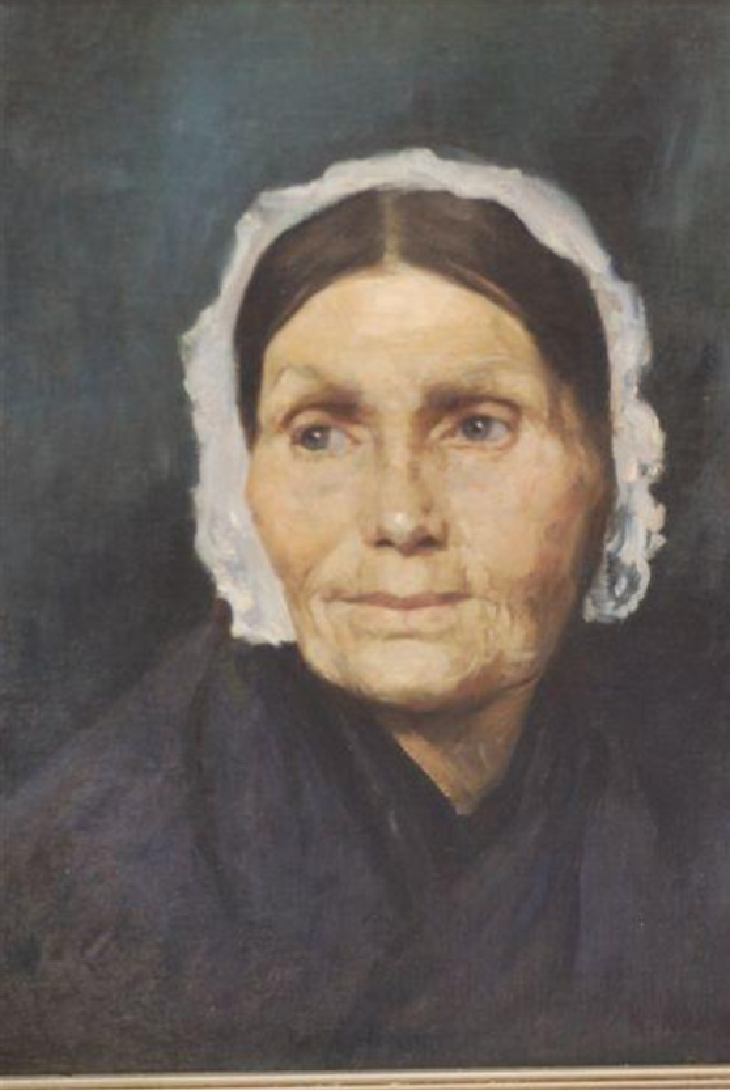
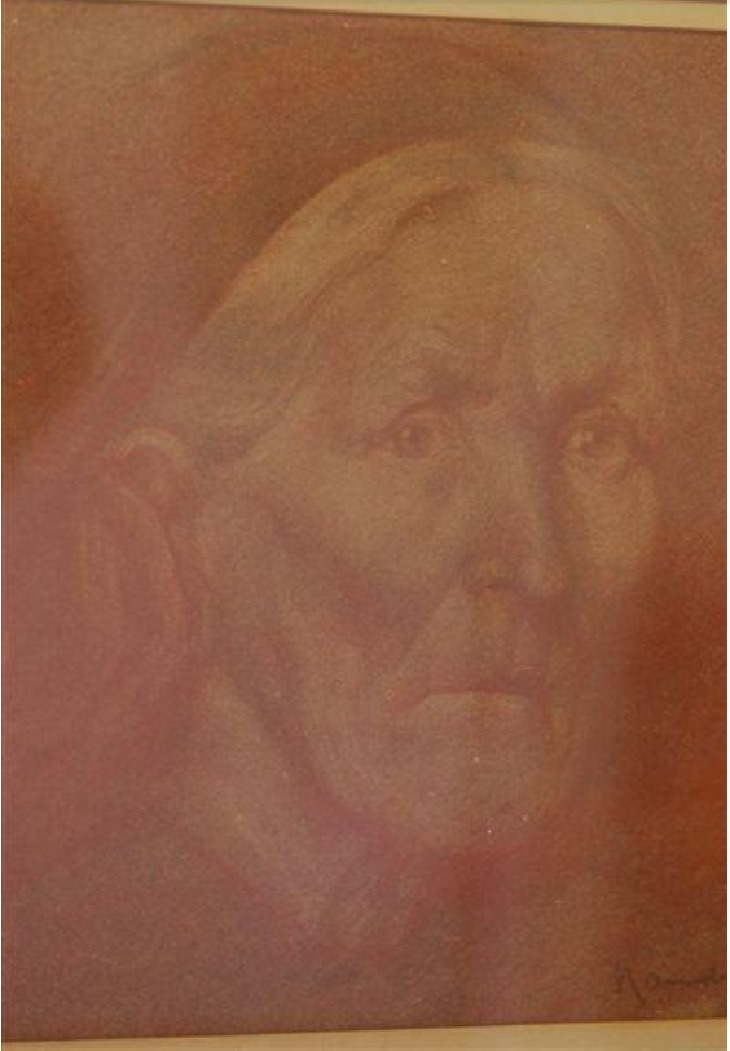
The photo unfortunately does not do justice to the Munich woman’s beautiful blue eyes with a lively twinkle. The red chalk drawing is almost photographic. Both show Naudé’s focus and fascination with the expressive eyes of his subject.
Naudé did so well at the Munich Art Academy that he was offered a teaching post, but he chose to return to South Africa, after spending some time en route with the Barbizon Group of outdoor painters at Fontainebleau, near Paris:
The aims of the Barbizon group, whose interest in the precise and unglamorized renditions of peasant life and scenery, and in painting ‘en plein air’, seem to have had an enduring effect on Naudé’s landscape painting.23
- Still searching for her portrait by Naudé: oil on canvas 75 x 60cm, unsigned (Roets, p.179, App.B no.18).↩︎
- Similarly, enquiries have not produced a copy of his portrait by Naudé: oil on canvas 75 x 60cm, unsigned (Roets, p.179, App.B no.17).↩︎
- Obituary in the Cape Times 6 April 1941 by correspondent, and Nick van der Leek, “The Flowering Namaqualand of Hugo Naudé“ Country Life (April 2016): 51.↩︎
- Roets, p.21.↩︎
- Talk given to the Worcester branch of the SAAA 9 September 1982 by “Wollie”.↩︎
- Born 24 March 1855 in Wittebergen, Eastern Cape – died 11 December 1920 Wynberg, Western Cape, she was one of the first campaigners for women’s rights and an anti-British imperialism pacifist in South Africa.↩︎
- Who would later co-author the first medical textbook about homosexuality, in 1897.↩︎
- Author’s translation of the Worcester talk.↩︎
- Author’s translation of what Philip Naudé’s step grandmother told him: “ons ou stamvader D.F. dit pertinent in sy vurige en kragtige gebede gevra het dat sy nasate nie te ryk en welvarend moet wees nie – want dan het hy geredeneer verkoop hulle hulle siel vir die wêreld se rykdom en plesier” from Philip’s “’n Paar interessante geskiedkundige gebeurtenisse omtrent ons Naudés voorvaders”, p.2.↩︎
- He also sent the same photo to his sister Catherina: “To my loving sister. Yrs H.N. Longing for you & yr.photos. dear – Hugo Naudé.”↩︎
- Roets, p.28.↩︎
- See extracts from an article by W.R. Burns, “Hugo Naudé of Worcester & His House Beautiful” The South African Home Journal (February/October 1910) in the Brown Family Papers BC 597 A61 (UCT Libraries’ Special Collections): first paragraph. Transcription of handwritten extract to appear in forthcoming Appendix A. Many Thanks to Principal Archivist of the UCT Libraries’ Special Collections, Michal Singer, and Masood Malan who assisted with scans.↩︎
- Evelyn Cohen, “Early Training and French Vision in South African Art Prior to 1920” in Paris and South African Artists 1850-1965 (Cape Town: South African National Gallery, 1988), p.12.↩︎