In 1904 Naudé moved from the farm into Worcester where he designed and built his double-storey house at 93 Russell Street, now the Hugo Naudé House and Little Theatre at 113 & 115 Russell Street:28
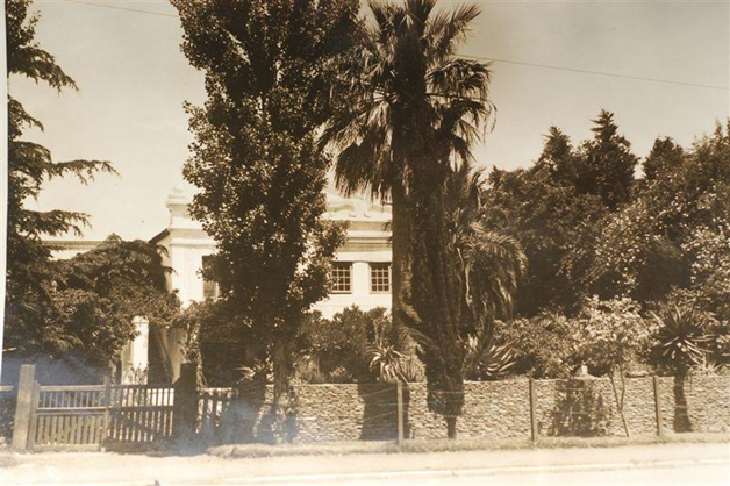
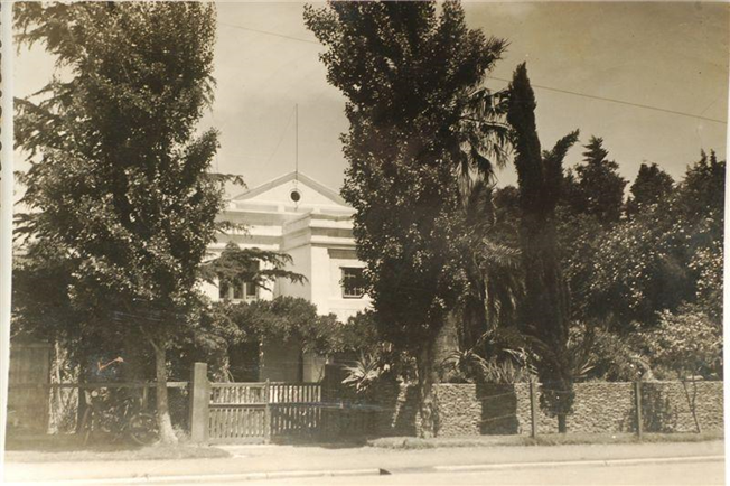
As on the “Aan-de-Doorns” family farm photo, there was a huge date palm in front of the house, and a Lebanon Cedar planted at the side by Naudé himself (tree branches sticking out on left-hand-side of first photo).
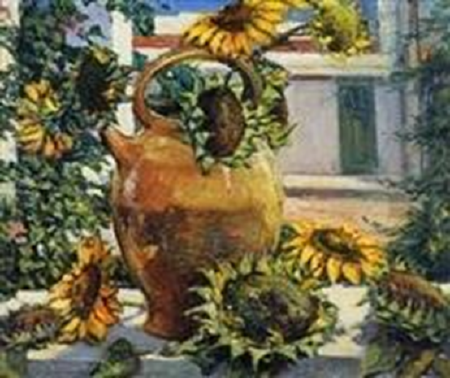
The cedar was subsequently removed to make way for the Little Theatre (see below) but is visible in his Still Lifes: Sunflowers with Jar and Proteas in a Jar. “Wollie” recalled that the Artist liked to have the sun streaming through the flowers, hence he placed the “Jerusalem Jar” on the low wall at the foot of the staircase.
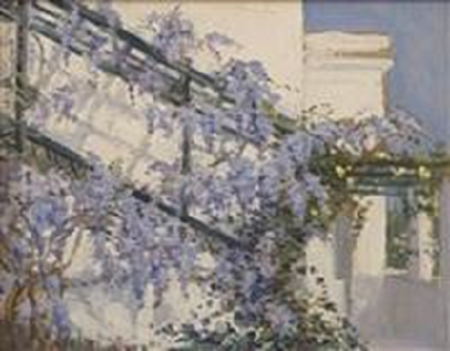
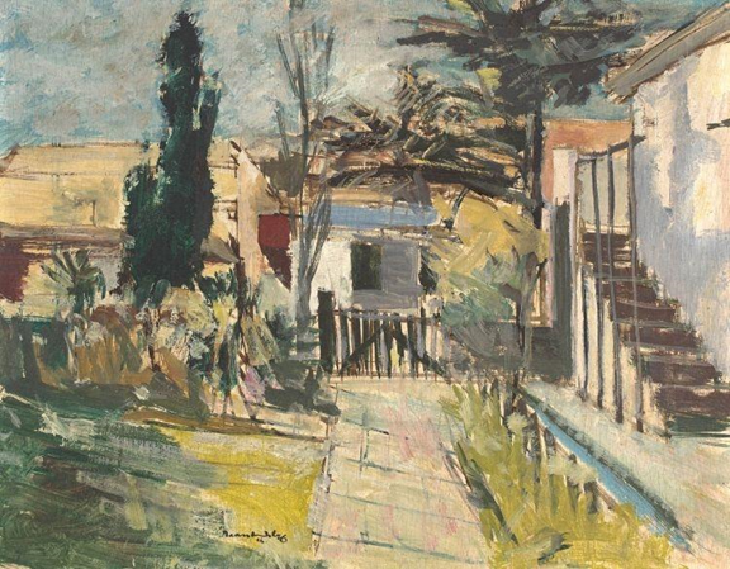
His studio was on the upper level approached by a Wistaria-covered staircase on the outside:
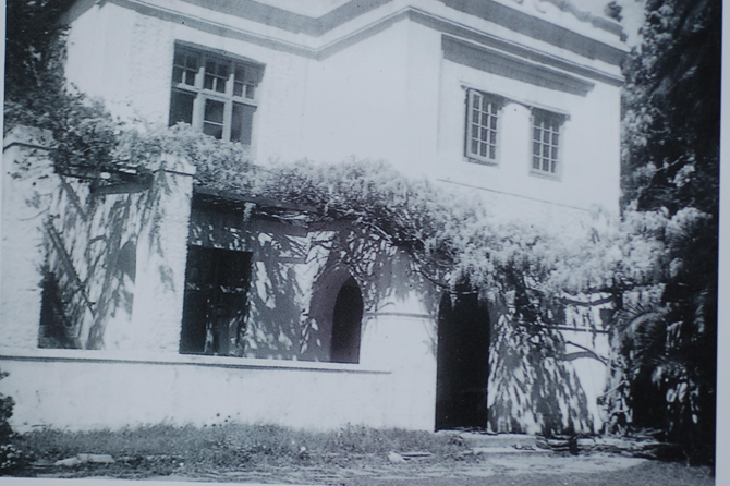
Here Naudé gave art lessons and held musical evenings:
My uncle was a great lover of music. During his student days in Munich he developed a taste for the Wagner operas29 and had acquired records of several of these. He also had a fine record collection of Beethoven, Schubert, etc. During the break for tea when one was allowed to talk, Ravel’s Bolero was often played as background music.30
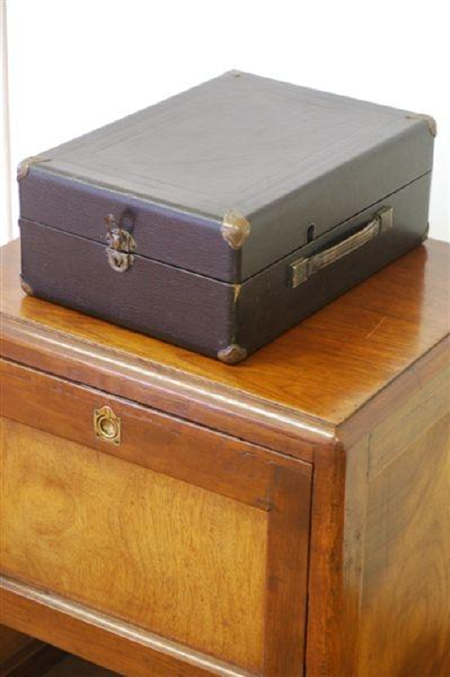
“Wollie” recalls how it was his job at these musical evenings in the Studio to sharpen the fibre needles, wind the gramophone and change the records. It was wonderful to see the Artist’s gramophone player back in the Studio, Thanks to Helen Walters, as it was one of the items auctioned off in 1941:
Naudé was active in the local music Society which organized concerts using musicians from Cape Town:
Often these were entertained at The Studio after the concerts. On one occasion one of the performers, who was disgruntled with his measly fee, took one of the paintings in The Studio claiming this as a more adequate fee!31
In her 1974 book about the artist, Adèle Naudé describes “an unusual outside staircase of brick with a low wall on which an earthen jug – later always called ‘The Rebecca Jar from Jerusalem’ by my husband32 – would sometimes be standing, filled with sunflowers or Leucadendron,33 still life works familiar to all to-day”:34
Scout meetings were held in the outbuilding alongside the house, now known as the Little Theatre:
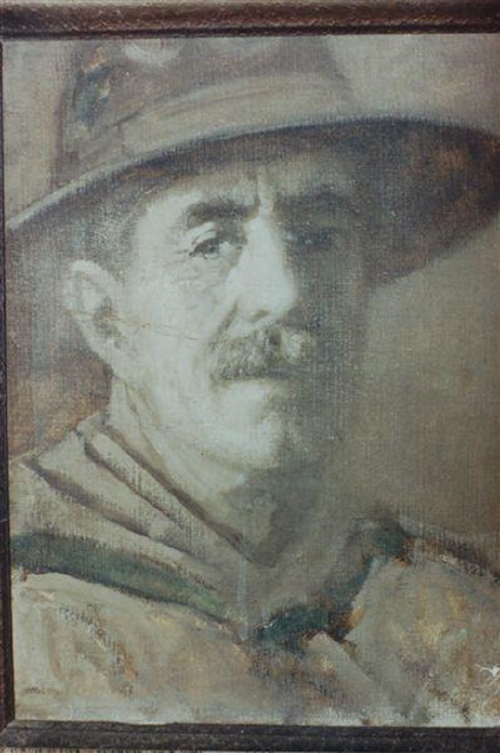
He was Scoutmaster, nicknamed ‘Lobo’:
Aunt Julie, his wife, was ‘Blanca’.35
David van Eeden remembers “Artist Naudé” as his Scout Master:
The Scout Hall was next to the main residence and also adjoined his Studio. Only a door separated the two rooms and the Scouts had no respect for the paintings on various easels as we played rough games in & around the paintings, not realizing their eventual worth. We called him “Tobie”.36
- Photos found amongst “Wollie”’s documents about the artist.↩︎
- Wagner sat for his portrait by Naudé’s portrait teacher at the Munich Art Academy, Franz von Lenbach (Adèle Naudé, Hugo Naudé, p.12).↩︎
- Talk for the Worcester branch of the SAAA, 9 September 1982, and at the opening of an extended Naudé exhibition in the new Jean Welz Gallery on 31 March 1993 by “Wollie”, entitled “Hugo Naudé – The Man”.↩︎
- Ibid.↩︎
- The artist’s nephew, the architect David Francois Hugo Naudé. See Africa to Italy for an image of the “Jerusalem Jar”.↩︎
- See Proteas in a Jar.↩︎
- Adèle Naudé, Hugo Naudé, pp.8-9.↩︎
- Adèle Naudé, Hugo Naudé, pp.17 & 10.↩︎
- Letter from the son of the artist’s sister-in-law’s sister to the author dated 1 February 2006.↩︎