When we finished singing, Pieter would fetch the black kettle for coffee around the fire. Then we would talk again about the colourful autumn just passed and we’d admire his completed painting which was begun on that day in the veld. We’d enjoy again together the rich valley where the late autumn sun shone on the farm-houses and vineyards, the misty blue, deep gorges
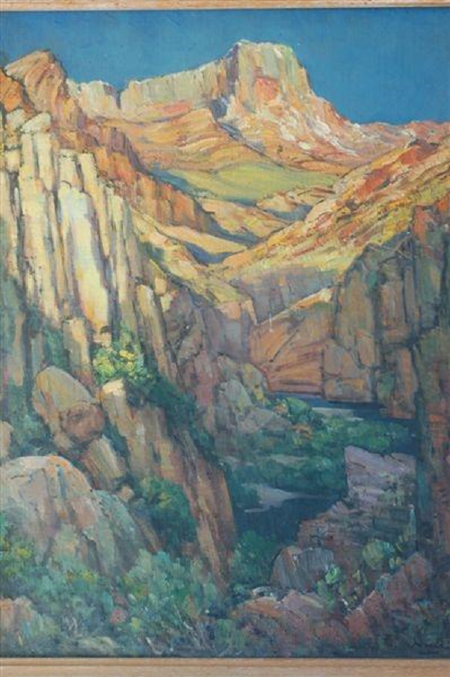
and the high steep mountain peaks behind with the first snow.
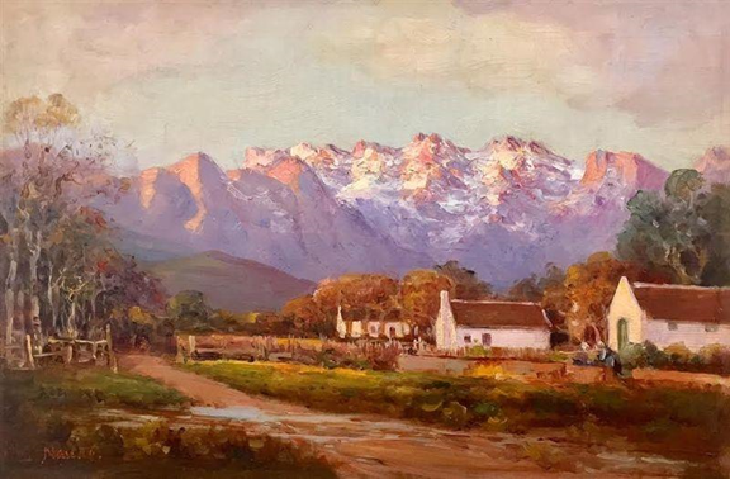
Such outings were essential to him for the chance to get away and gain new perspectives. The boys often joined him on longer outings; a weekend at the sea, a week to the Knysna Forest or a holiday to Namaqualand flowers. The caravan which was adapted for this purpose, was fun for them. It was the boys’ responsibility to set up camp and prepare the meals and even, if they were at the sea, to catch fish for supper.
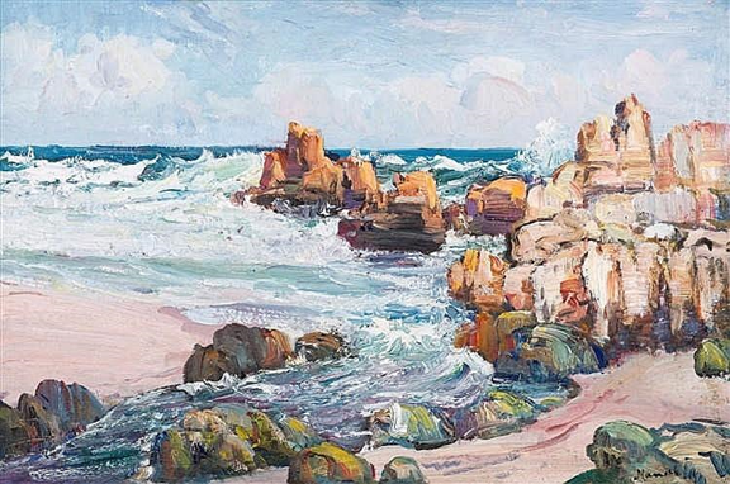
At the coast it was a challenge for Pieter to paint the sleeping town early in the morning when the sea was as flat as a farm dam;
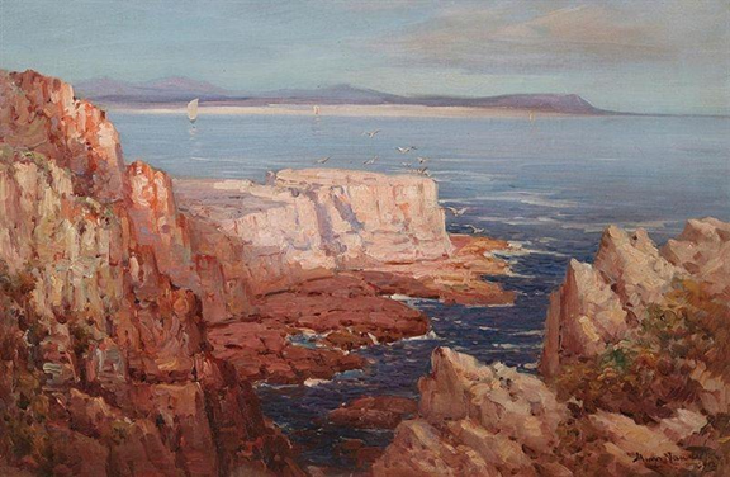
or else when the moody waves crashed against each other or over the rocks at high tide,
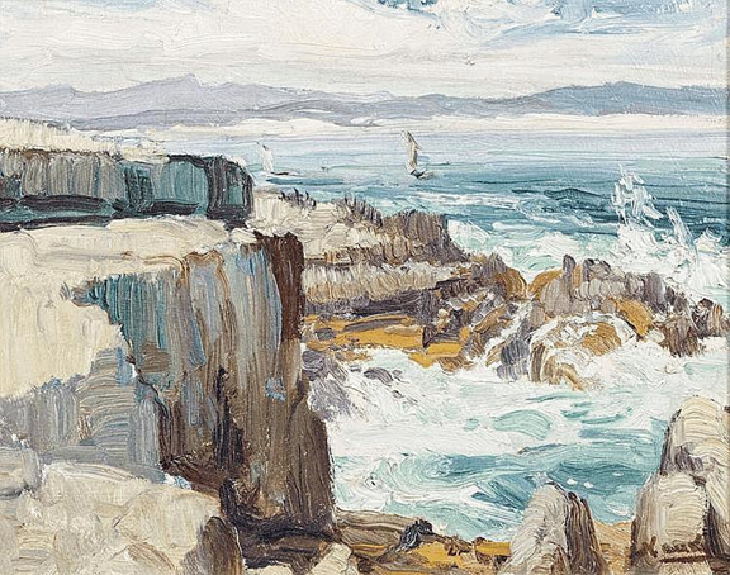
it was his task to capture the changing colours and movements.
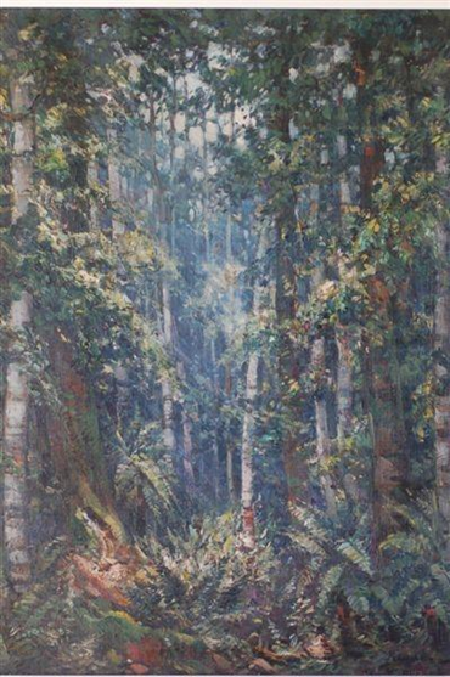
In the Knysna Forest it was the giant trees and high ferns which made an impression with their cool shadows and subtle blues and greens suggesting enigmatic depths;
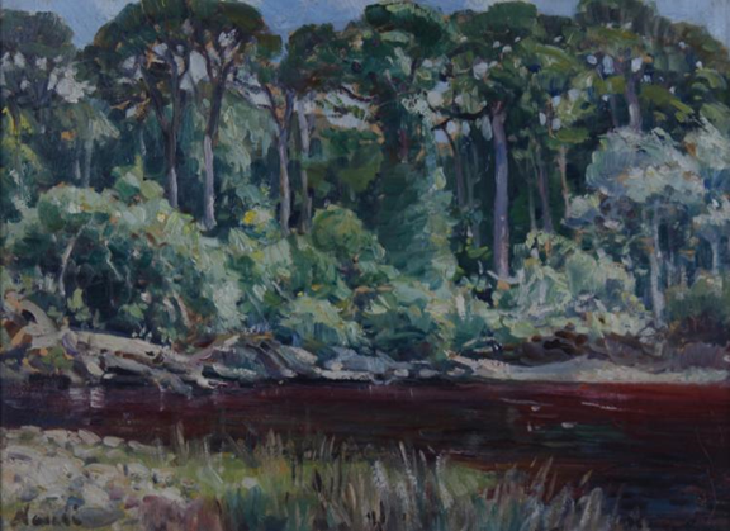
or the tranquil brown water amongst the bushes which entranced with cool depths and scanty sunlight.
By contrast Namaqualand’s flowers were a diverse blaze of colour with a sea of luminous orange and red, yellow and pastel colours which sparkled and shimmered over the extensive hills.
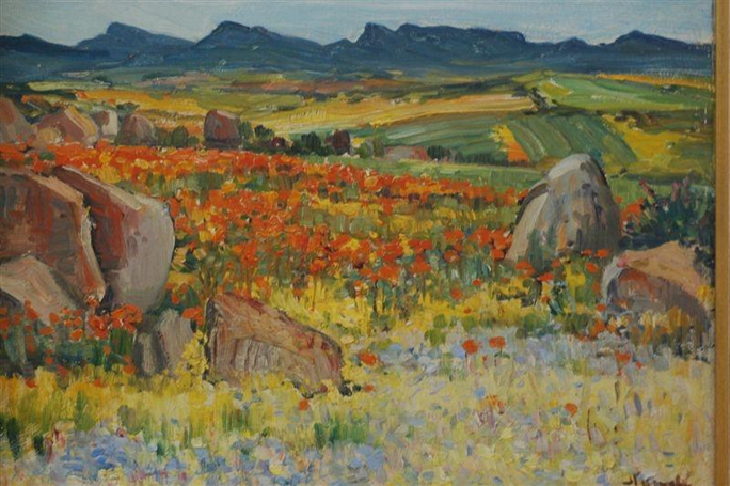
He collected seed from these wildflowers [veldblomme] and even cultivated new hybrids in his garden. On the return journey he couldn’t resist stopping at the stony ridges of the Karoo because each Spring the succulents [vygies] there were a new work of Wonder. Then the hard clods are covered with the succulent leaves and the open flowers a multi-coloured display which appears to be both flashy and regal. Pieter never drove into the veld without garden tools and frequently used his garden fork to extricate some of the most beautiful colours, soil and all, to conserve somewhere else [in those days there were no conservation regulations forbidding removal of plants!].
Continues…